Black Pepper Quality & Buyer Specification Guide
What ISO 959-1 and Codex CXS 326-2017 actually require for bulk density, moisture and piperine content, what ASTA's US-import cleanliness rules set, how black, white and green pepper differ as products -- and an honest look at Tanzania's small, data-thin pepper trade. Grading conventions here are industry-wide, not Tanzania-specific unless stated -- see our Tanzania black pepper overview for origin, production and market context.
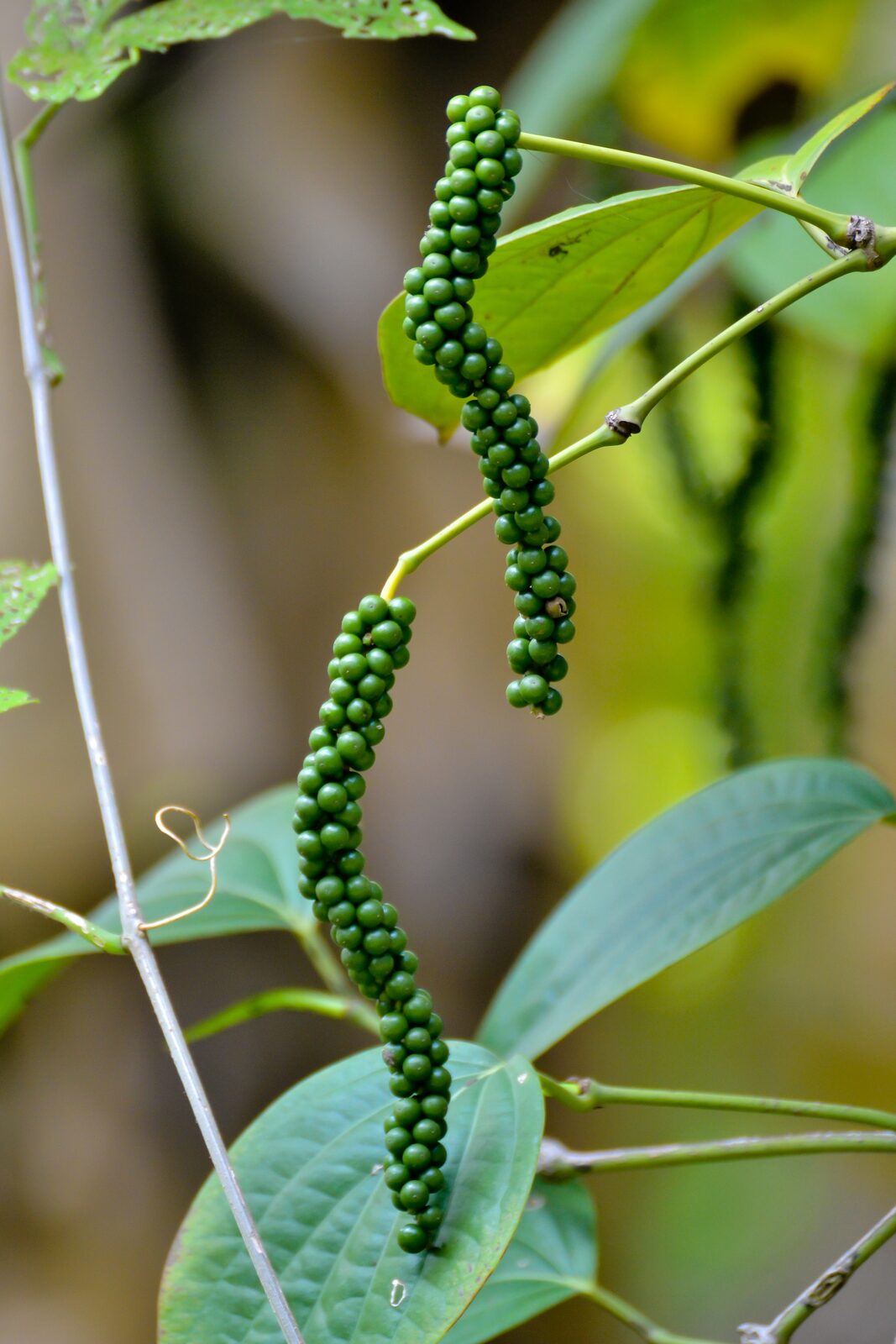
_fruits.jpg)
Two standards, broadly aligned but not identical
Black pepper grading is covered by two overlapping-but-distinct standards, and we report both rather than merge them into one table:
- ISO 959-1:1998 "Pepper (Piper nigrum L.), whole or ground -- Specification -- Part 1: Black pepper" (a companion, ISO 959-2:1998, covers white pepper). Covers non-processed, semi-processed and processed commercial stages, and sets requirements for organoleptic quality, contaminants, physical/chemical characteristics, sampling, testing, packaging and marking.
- Codex Alimentarius CXS 326-2017 "Standard for Black, White and Green Peppers", adopted 2017 -- the Codex (food-safety-oriented, UN FAO/WHO) reference standard, covering all three pepper colours in one document, applying to product "offered for direct consumption, as an ingredient in food processing, or for repackaging."
| Parameter | ISO 959-1:1998 | Codex CXS 326-2017 |
|---|---|---|
| Bulk density, Grade/Class I (min) | 550 g/l | 550 g/l |
| Bulk density, Grade/Class II (min) | 500 g/l | 500 g/l |
| Bulk density, Grade/Class III (min) | 450 g/l | 400 g/l -- genuinely lower than ISO's figure, not a transcription error |
| Moisture, Grade/Class I (max) | 12.0% | 12.0% |
| Moisture, Grade/Class II (max) | 12.5% | 12.0% (Codex does not differentiate Class I/II on moisture) |
| Moisture, Grade/Class III (max) | 13.0% | 13.0% |
ISO 959-1 additionally specifies total ash (dry basis) maximum 6.0% for Grade I, 7.0% for Grades II/III; non-volatile ether extract minimum 7.0% for all grades; volatile oil minimum 2.0 ml/100g. On piperine, secondary summaries of ISO 959-1 disagree with each other: one source reports a flat minimum of 4.0% for black/white pepper generally, another reports a sliding scale from 4.0% (Grade I) down to 3.0% (Grade III). We could not access the standard's own paywalled text to resolve which is correct, so we report both rather than silently picking one. For context, peer-reviewed phytochemistry sources put piperine content across pepper generally in a wider 1-9% range depending on cultivar, origin and drying conditions -- the ISO minimum is a trade-floor figure, not the full range nature actually produces.
Sources: secondary summaries of ISO, ISO 959-1:1998 (full text paywalled; bulk-density, moisture, ash, ether-extract and oil figures per secondary summary); Codex, CXS 326-2017 (bulk-density and moisture figures confirmed from the standard's own published text); piperine range per peer-reviewed phytochemistry literature (general, not Tanzania-specific).
ASTA cleanliness specifications (US import market)
Separate from ISO/Codex grading, the American Spice Trade Association (ASTA) sets macroscopic-contamination limits relevant to any pepper entering the US market. For whole black pepper, ASTA's cleanliness specifications set: maximum 2 whole dead insects by count; mammalian excreta maximum 1 mg/lb; other excreta maximum 5.0 mg/lb; extraneous/foreign matter maximum 1.00% by weight; moldy and/or insect-infested pieces maximum 1% by weight. Living-insect infestation carries zero tolerance under ASTA's framework, consistent with the general cross-commodity pattern this network has found for other spices and nuts. These are U.S.-specific import thresholds, not an ISO or Tanzania-specific figure, but they are the practical bar most Tanzanian pepper destined for the US market will actually be held to.
Source: ASTA Cleanliness Specifications for Spices, Seeds and Herbs (mirrored copy; we did not independently fetch ASTA's own hosted original).
Product forms: black, white and green pepper are processing choices, not varieties
All three come from the same plant, Piper nigrum, differing only in harvest timing and post-harvest processing -- an important distinction for a buyer comparing quoted prices across "types":
- Black pepper -- mature-but-not-fully-ripe green berries, sun-dried whole with the pericarp (skin) intact, which blackens as it dries. The dominant export form.
- White pepper -- made from fully ripe red berries. Traditional processing uses water retting: berries are soaked in slow-running water for roughly a week while bacterial action loosens the pericarp, which is then trampled/rubbed off by hand, washed, and sun-dried to roughly 10-12% moisture, yielding a cream/white-coloured peppercorn. Pectinase-based processing can shorten decortication time (reportedly around 40-45 hours for black pepper pericarp removal) but is a less traditional, more industrial route.
- Green pepper -- unripe berries, preserved by drying, freeze-drying or brining rather than full fermentation/drying; a smaller, more specialised commercial form than black or white.
Reported yield: roughly 100kg of fresh mature berries produces about 33-37kg of black pepper or 25-28kg of white pepper -- white pepper's extra processing step (removing the pericarp) is also why it typically commands a price premium over black pepper of the same underlying berry.
Sources: general spice-science literature on pepper post-harvest processing (water retting, pectinase decortication, yield figures) -- general crop-science sourcing, not Tanzania-specific.
Packaging
We did not find a pepper-specific packaging figure attributable to ISO 959-1, Codex CXS 326-2017, or any Tanzania-specific source. General spice-export practice uses multi-wall paper or jute sacks (commonly in the tens-of-kilograms range) or, for smaller/specialty lots, vacuum-sealed or gas-flushed polybags -- treat this as general spice-industry convention, consistent with what we found for cashew and clove packaging elsewhere on this network, rather than a confirmed pepper-specific or Tanzania-specific figure.
Tanzania-specific: a real but marginal, data-thin crop
Black pepper (locally known by mainland genotype names BABUKUBWA, ISMAILIA, BABUNDOGO, FUPI, NDEFU and KATI) is a real, smallholder commercial crop in Tanzania -- one of five spices named in the country's own spice-sector development strategy, alongside cloves, ginger, cinnamon and cardamom -- but it has nothing close to cloves' scale. A 2026 peer-reviewed field survey found cultivation concentrated among smallholders citing low price, knowledge gaps and drought as their leading production constraints, not a plantation-scale export industry.
Correction carried forward from this network's own prior research (2026-09-28): an earlier version of our Tanzania black pepper profile named Pemba Island/Zanzibar as a growing area. A fresh research pass, including a direct check against the 2026 peer-reviewed survey, could not independently confirm commercial black pepper cultivation on Unguja or Pemba from any government, academic or otherwise-checkable source -- that claim was retracted on our profile page rather than repeated, and we do not re-introduce it here. The documented growing areas are both on the mainland: Morogoro Rural district (Uluguru Mountains) and Muheza district, Tanga Region (East Usambara Mountains). A separate marketplace source claims smallholder sourcing from Iringa in southern Tanzania; this has no named growers or independent corroboration and is noted only as an unconfirmed claim.
A documented, Tanzania-specific quality problem: pepper is frequently harvested before full maturity or sun-dried on mats laid directly on the ground, creating a real contamination risk from dust or livestock -- a 2017 field-research finding that predates our network's 2026-09-28 research pass and has not been independently re-verified against its original source since. This is a concrete area where buyer-side inspection and post-harvest-handling investment could add real value, not a historical footnote.
Sources: this network's own Tanzania Black Pepper profile, which documents the 2026-09-28 Pemba/Zanzibar retraction directly and cites the 2026 peer-reviewed field survey and a 2017 field-research finding on drying practice.
Tanzania-specific: production and export figures genuinely disagree
Production estimates conflict and are reported as such rather than reconciled: 457 tonnes (2022, FAOSTAT-derived) versus 437 tonnes for an unclear "2024" figure from a different aggregator. Export figures also show real year-on-year decline with no corroborated explanation: Tridge trade-intelligence data shows 279.94 tonnes worth $1,004,611 in 2022, falling to 254.56 tonnes worth $803,546 in 2023. An unexplained $14.8 million export spike in 2014 (ITC Trade Map, HS 0904 series) is not corroborated elsewhere and is flagged as a likely data anomaly rather than a real trend. A computed export unit value (export value ÷ volume, not a domestic wholesale price) of roughly $3.23/kg was derived from UN Comtrade data as of January 2024, per a trade-intelligence secondary source.
The Tanzania Spices Association (TASPA)'s own public-facing materials separately list black pepper among member-produced spices at a quoted price of roughly TZS 22,000/kg -- a current member/retail-facing listing on the association's own site, not an audited market average, and not reconciled against the customs-derived figures above. Tanzania's own spice-sector trade association has been on record (The Citizen, 2019) describing the underlying data problem directly: "We are scattered; every spice farmer survives on his/her own, which makes it very difficult to collect data." Two processors/exporters have independently-corroborated activity: Trianon Spices (Muheza factory sourcing from 1,000+ smallholders, confirmed via a 2023 Invest International DGGF loan) and Horizon Spices (the Tanzania arm of Horizon Group Africa, confirmed via 2025 trade-press reports of a $5 million Aavishkaar Capital/KfW financing deal; the company's own website does not currently resolve).
Sources: this network's own Tanzania Black Pepper profile, citing ITC Trade Map, Tridge, UN Comtrade-derived figures, and named processor/financing disclosures; Tanzania Spices Association public materials (member price listing).
Tanzania-specific: TBS standard
Multiple secondary sources describing the Tanzania Bureau of Standards' compulsory-standards list cite TZS 30:2018(E) "Black pepper and white pepper (whole and ground) -- Specification" as a compulsory Tanzania standard. We were not able to independently open the primary TBS document to confirm its exact scope and numeric content -- the same access limitation flagged elsewhere on this network for other TBS compulsory standards -- so treat this as reported rather than independently verified.
Export documentation
Export HS classification falls under heading 0904 ("Pepper of the genus Piper"), with black/white pepper specifically at subheadings 0904.11 (neither crushed nor ground) and 0904.12 (crushed or ground) -- unlike cardamom, black and white pepper share one heading regardless of colour. We did not find a pepper-specific Tanzanian export-documentation checklist; expect the general pattern used across Tanzanian spice/agricultural exports (commercial invoice, packing list, bill of lading, certificate of origin, phytosanitary certificate) to apply, confirmed directly with your exporter rather than assumed. See our wider Quality Inspection & Pre-Shipment Verification and Incoterms for Commodity Buyers guides for the cross-commodity detail behind both.
Harvest timing -- an honest gap, not an assumption
We could not verify a Tanzania-specific month-by-month black pepper harvest calendar from any government, academic or trade source in our research. General black-pepper literature (mostly India/Vietnam-focused) describes harvest windows concentrated in the dry season, but applying another origin's calendar to Tanzania's different mainland growing regions (Uluguru, East Usambara) would be a guess dressed up as a fact. We are not doing that here -- the harvest-calendar widget above will stay empty for black pepper until a Tanzania-specific month range can be independently confirmed and added to the network's verified harvest-seasonality data.
Buyer specification checklist
Worth putting in an RFQ or purchase order, whether or not every field applies to your order:
- Colour/form -- black, white or green pepper; confirm which, since these are genuinely different products with different prices.
- Grade/standard quoted -- e.g. "Class I per ISO 959-1" or "Class I per Codex CXS 326-2017" -- and be aware the two standards' Class III bulk-density floors differ (450 g/l vs. 400 g/l), so name the standard, not just the class letter.
- Bulk density -- in g/l, the primary size/density grading criterion.
- Moisture -- target maximum, per the grade table above.
- Piperine content -- if you need a number, request the supplier's own HPLC/test basis rather than assuming a single ISO figure, given the 4.0%-flat vs. 4.0%-to-3.0%-sliding-scale discrepancy noted above.
- Cleanliness -- if shipping to the US, specify ASTA cleanliness compliance explicitly.
- Origin -- mainland Tanzania (Muheza/Tanga, Morogoro/Uluguru are the documented regions) -- do not assume Zanzibar/Pemba origin without independent verification, given the retraction described above.
- Packaging -- bag type and net weight.
- Testing requirements -- certificate of analysis, third-party lab, or your own incoming inspection.
- Destination & Incoterm -- see our Incoterms for Commodity Buyers guide.
Sample & inspection guidance
- Appearance -- uniform size and colour for the stated form (black/white/green); check for light, shrivelled "light berries" against the grade ordered.
- Aroma -- should be sharply pungent; a flat or musty smell suggests age, poor drying or storage damage.
- Foreign matter & contamination -- given the documented Tanzania-specific risk of ground-mat drying (dust, livestock contact), inspect visually for dirt, grit or extraneous plant matter more carefully than you might for an origin with cleaner documented post-harvest handling.
- Bulk density feel -- plump, dense berries that don't float readily are a rough field indicator of good bulk density, though a lab density test is the only way to confirm the g/l figure against a grade.
- Packaging condition -- intact bags, no moisture ingress or insect activity.
A visual/aroma sample check is a screening step, not a substitute for laboratory testing -- bulk density, moisture, piperine and ASTA-cleanliness compliance all require lab/sieve equipment to confirm, not inspection by eye. Our general Quality Inspection & Pre-Shipment Verification guide covers the wider pre-shipment inspection process that applies across commodities, including black pepper.
Full Tanzania black pepper profile
Growing regions, the 2026-09-28 Pemba/Zanzibar retraction, named processors, and conflicting trade data with sources.
Read the full profile →Suppliers

Trianon Spices
Spice processor and exporter with a factory in Muheza, Tanga Region, sourcing from 1,000+ smallholder farmers…
Ubora Landmark Limited
Organic black pepper exporter and bulk spice supplier sourcing from Tanga and Morogoro regions; also handles…
Horizon Spices Limited
Tanzania operations of Horizon Group, a multinational spice-aggregation company founded 2006 in Nigeria that pivoted into…
Kili Quality
Moshi-based trader sourcing sesame from Lindi, Mtwara and Singida (and Ghana); states Tanzanian sesame is valued…
Agripromise Co. Ltd (Linda Spices)
Spice producer sourcing black pepper, cinnamon and other spices from smallholder farmers in Morogoro Region's Uluguru…
Last reviewed 8 October 2026. Sources cited inline above; see also Data Sources and Methodology for how we handle disagreeing figures and unverifiable claims.